The Story of Linen – From Childhood Memories to Modern Elegance
For many of us, linen is more than just a fabric on a store shelf. It was an entire world that began with blue flower fields waving like the sea. The journey from a flax stalk to a finished shirt used to be long, demanding, and full of patience, but that is exactly why this fabric has earned its "power."
How it was in the old days (A personal memory) Growing up in the countryside, linen cultivation was a sacred ritual. When the flax was ready, it wasn't mown but pulled out by hand with the roots. Then came the most "fragrant" and dangerous stage – the flax soaking (linumērkis).
I still remember, as a little girl, running to my grandmother's farm, and she would strictly warn me: "Don't go near the flax ponds!" These were ponds where flax stalks were soaked so they would soften and the fibers would separate from the wood. It was a mysterious and slightly dangerous process that required a master's eye.
After soaking came drying, threshing, and carding. From the remaining tow (pakulas), we would twist ropes for all household needs – they were strong and reliable. Only after this long process could one sit at the loom and weave.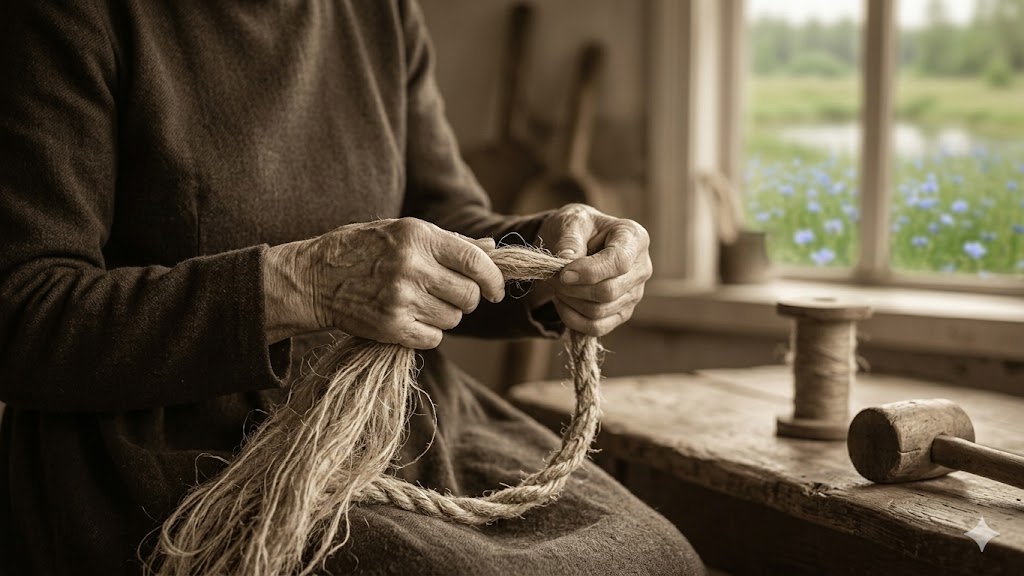
How simple is it today?
Today, this heavy labor has been taken over by powerful machines and modern technology. We no longer have to soak flax in ponds or crush it with wooden tools. Modern technology allows for incredibly durable and high-quality fabric while preserving all its natural properties. This industrially produced linen is "indestructible" – it serves for decades without losing its color or strength.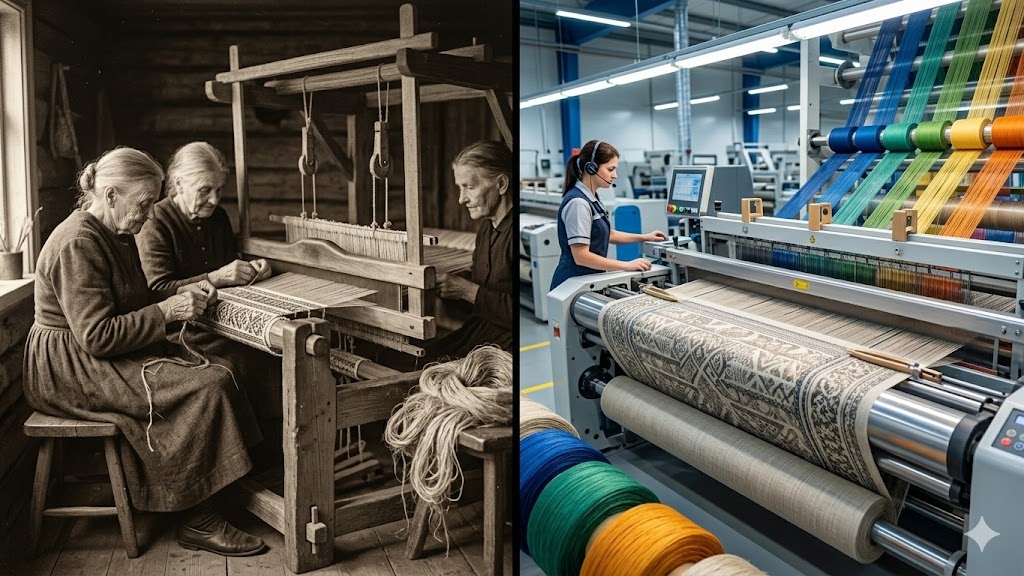
A Tradition Continued In our shop, we honor both processes. Here you will find:
Modern Excellence: Practical, beautifully printed aprons, bags, and tablecloths for everyday tasks.
Ancient Craft: An exclusive collection of hand-woven linen from Latvia – tablecloths, runners, and scarves made on wooden looms, just like in the days of our grandmothers.
Linen is our shared story. It is a fabric that breathes, protects, and never goes out of style, because it carries our history and the power of nature within it.