Riga Central Market: From Zeppelin Hangers to the City’s Living Heart
A Legacy of Zeppelins and Engineering Triumph
The story of the Riga Central Market didn't start with market stalls, but with the sky. Did you know that these massive pavilions weren't originally built for the city? They were constructed during World War I in Vaiņode, Courland, as giant hangers for the German army's Zeppelins. In the 1920s, the Riga municipality made a bold decision—to buy these structures, dismantle them, and transport them to Riga. Thus, in 1930, the world saw the most modern and largest market in Europe, whose towering frames still remind us of the sheer scale of history.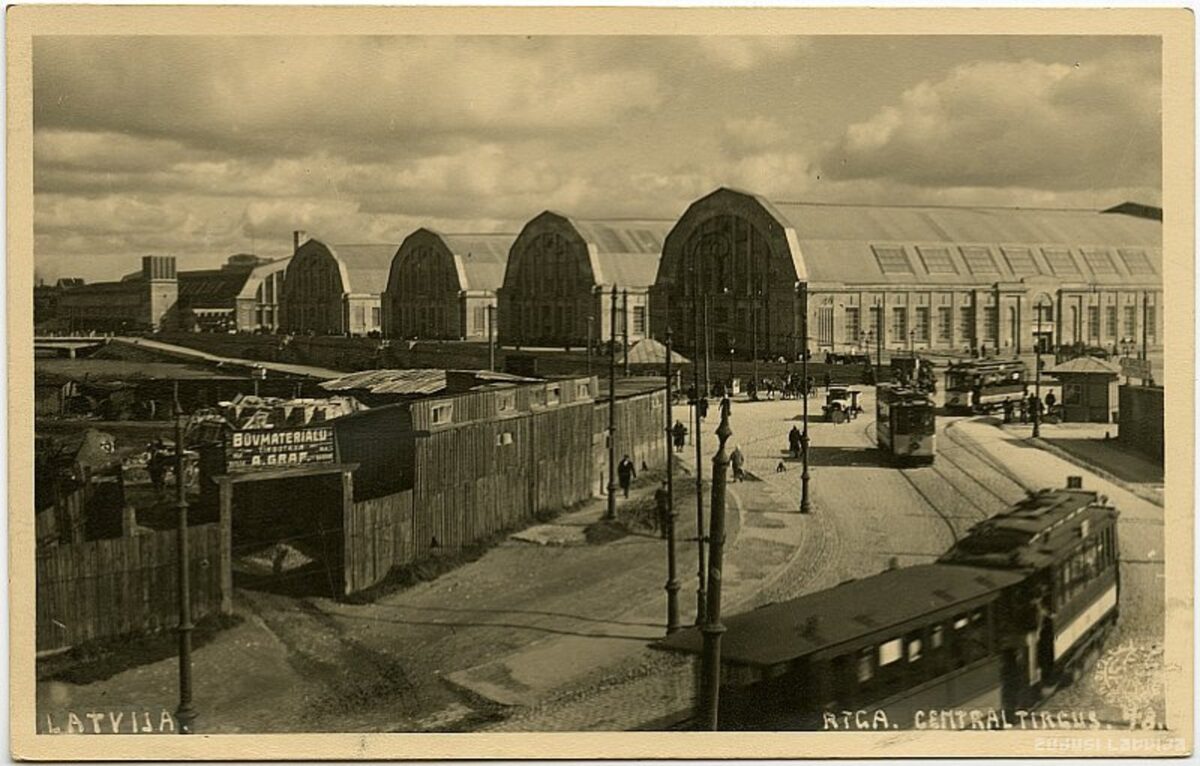
Secrets of the Underground City But the real secrets lie beneath your feet. Below the market pavilions lies a vast, two-hectare underground city. These are miles of tunnels, warehouses, and cold storage rooms connecting all the pavilions. During and after the war, a parallel world existed in these tunnels—not only was fresh food stored there using the era's most modern cooling systems, but legend has it that secret meetings took place and city mysteries vanished within them.
The Soviet Era and the Market Buzz
As decades passed, the market became the pulse of all of Latvia. Especially during the Soviet era, the Central Market was a place where life never stopped. There was an unbelievable bustle—times when people traveled from the farthest countryside for "scarce goods," and the pavilions smelled so strongly of authentic smoked meats, homemade cheese, and sauerkraut that you could catch the scent as far away as the station. The market wasn't just a place to shop; it was an information hub where every vendor knew the latest news.
Rebirth in a Modern Light
Today, the Central Market is changing once again, undergoing a grand reconstruction. The historic Zeppelin frames are gradually gaining a new, modern look, where industrial charm meets contemporary design and stylish cafes. Though the world around it changes, the same energy that has pulsed here for nearly a hundred years—from the silence of the Zeppelins to the hum of the modern city—can still be felt in its foundations.